Internal Debugging & Automation Tooling (Oracle)
Leveraging Agentic Workflows and Custom LLM Tooling to Reduce Enterprise Diagnostic Time by 65%
OVERVIEW
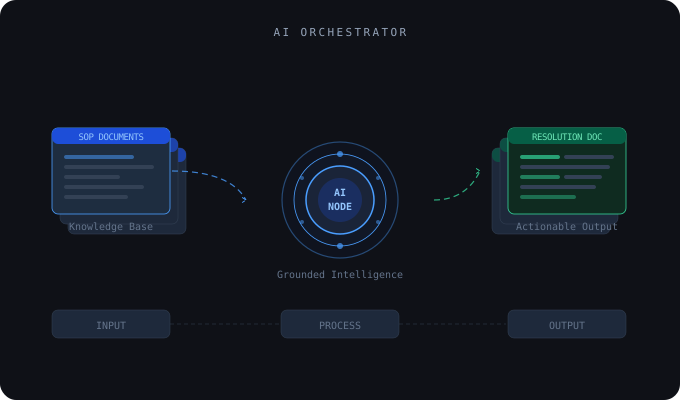
To standardize and accelerate the resolution of complex production incidents, I engineered a suite of Custom GPT models tailored to transform raw technical data into structured, high-fidelity documentation. These models were grounded on a curated repository of Standard Operating Procedures (SOPs) and internal technical knowledge, ensuring that outputs remained aligned with enterprise standards. I utilized k-shot prompting, incorporating specific examples of ideal outputs within the system instructions, to strictly enforce formatting requirements and complex criteria. By bridging the gap between raw logs, error codes, and actionable insights, the tool allows users to input unstructured data and receive a formatted technical document in seconds. This initiative reduced documentation overhead by 50% and established a new benchmark for troubleshooting consistency across the engineering team.

To address the systemic bottleneck of manual network trace analysis, I developed a high-performance HAR Analysis Tool that was ultimately adapted and deployed within the Oracle technical environment. While HTTP Archive files are traditionally audited line-by-line, I engineered a solution that automates the identification of 4xx/5xx error clusters, latency spikes, and payload inconsistencies. By tailoring the tool’s logic to handle the specific complexities of enterprise cloud headers and secure authentication flows, I facilitated a transition from manual JSON inspection to automated health-mapping. This adaptation accelerated issue resolution by 65% and established a standardized diagnostic framework used across the support organization to drive measurable operational efficiency.